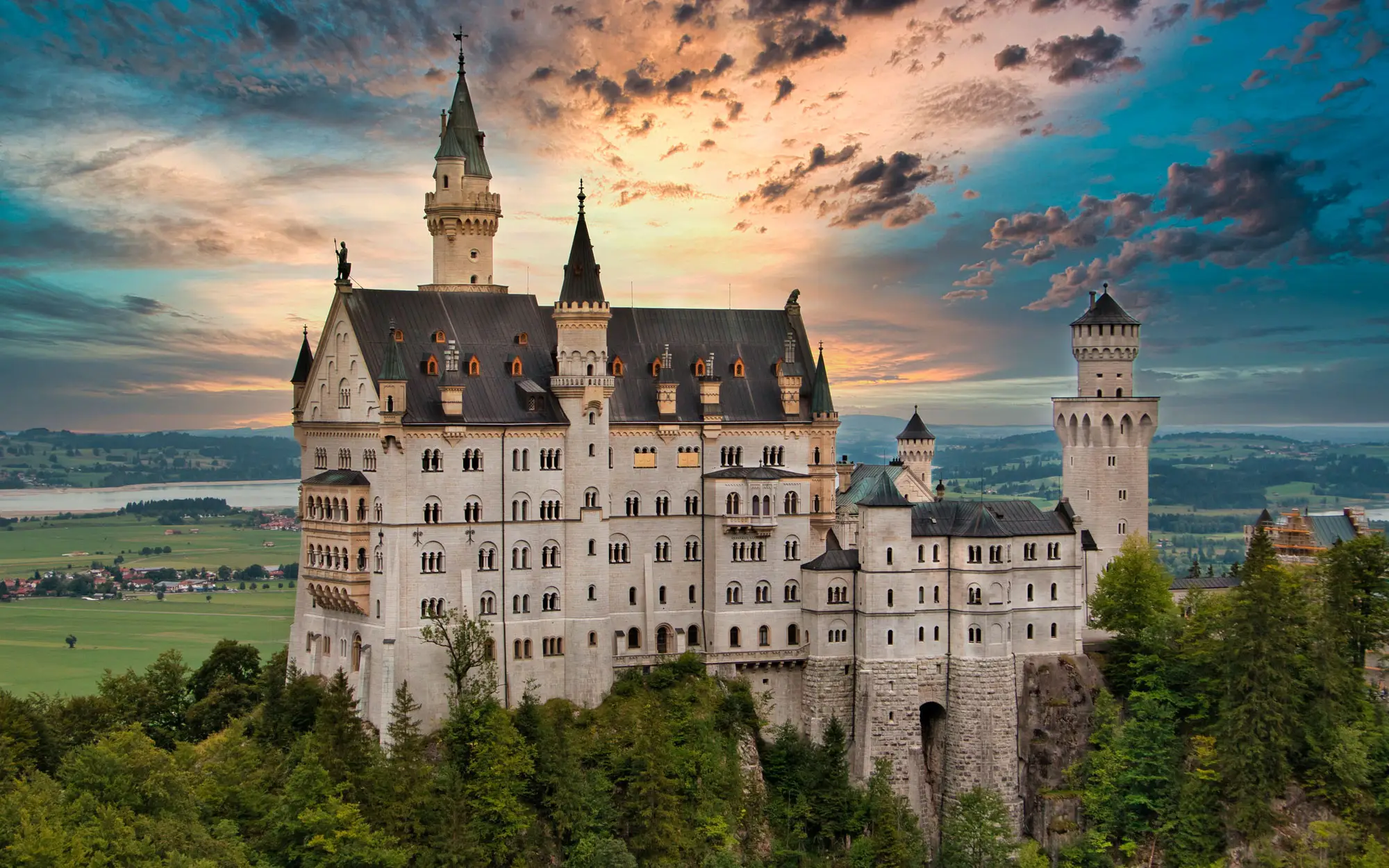
Neuschwanstein Castle is one of Germany’s most iconic landmarks, located in the Bavarian Alps near the town of Füssen. Built in the 19th century by King Ludwig II, the castle is renowned for its romantic, fairy-tale appearance with tall towers, elaborate facades, and picturesque surroundings. Its design was inspired by medieval castles and operas of the time, making it a favorite subject for artists and photographers.
The castle attracts millions of visitors each year from around the world. Tourists often explore the interior to see the luxurious rooms, intricate murals, and historic furniture. Walking trails around the castle offer stunning views of the surrounding mountains, forests, and the nearby Alpsee lake.
Neuschwanstein Castle has an interesting history beyond its architecture. Although King Ludwig II intended it as a personal retreat, the castle was opened to the public shortly after his death in 1886. Today, it serves as a museum, offering insight into 19th-century Bavarian royal life and the eccentric vision of the “Mad King.” Its combination of history, art, and scenic landscapes makes it a unique cultural attraction.
Visitors also appreciate the surrounding region, which includes charming villages, hiking paths, and nearby castles such as Hohenschwangau. The area provides ample opportunities for sightseeing, photography, and enjoying the natural beauty of Bavaria. With its timeless beauty and cultural significance, Neuschwanstein Castle continues to be one of the most photographed and visited landmarks in Germany.